Power Freedom for Suburban Homes Starts Here
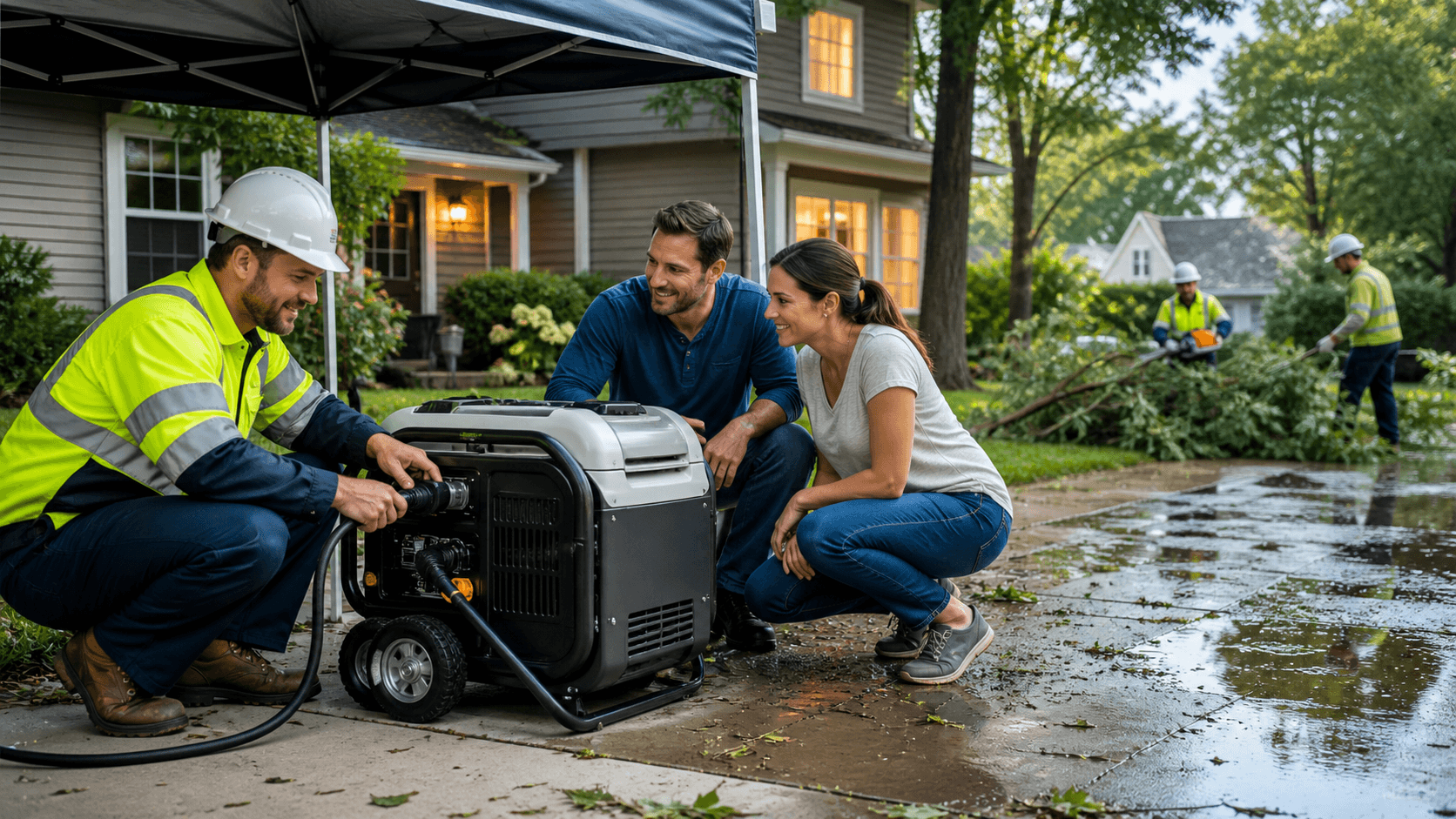
Grid power feels pretty solid, right up until it is not. One bad storm, a heat wave, or a random grid failure, and suddenly the house goes dark. Food in the fridge starts warming, kids lose Wi-Fi, remote work stops, and the house gets hot or cold fast.
Suburban homes pull a lot of power now. EVs, smart thermostats, home offices, cameras, tablets, and all the "always on" devices depend on steady electricity. When the grid fails, most people realize they have no backup plan beyond a few flashlights. Off-grid power solutions change that.
For suburban life, "off-grid power that actually works" means backup that is safe, quiet, and code-friendly. It should keep key circuits running without turning the yard into a noisy construction zone or triggering HOA complaints. We are talking about realistic systems that fit into normal driveways, garages, and back patios.
At Generator Vault, we focus on curated generators, solar power kits, portable power stations, and off-grid appliances that fit real-world homes like yours. Our goal is simple: help you keep life moving, even when the grid does not.
How to Decide If Off Grid Power Fits Your Suburban Life
Living totally off-grid is one lifestyle. Most suburban homeowners want something different. They want to stay connected to the utility but be "grid optional." That means the grid is great when it works, but your home can stand on its own when it does not.
Start with a quick checklist to see what you really need. Ask yourself:
- How often does your neighborhood lose power, and for how long?
- Do you get strong summer heat, winter ice, or storm seasons?
- Do you own your home, or does your landlord or HOA set limits?
- Do you have outdoor space for safe generator placement or small solar?
Then think about your lifestyle. Which things truly cannot go down, even for a few hours?
- Internet and work-from-home gear
- Refrigerators and freezers
- Medical devices or powered health gear
- Sump pump, well pump, or security system
- Furnace blower or basic heat source
This is where load planning starts. Make a "must run" list: fridge, Wi-Fi, some lights, maybe a furnace blower or well pump. Then a "nice to have" list: AC, EV charging, laundry, big kitchen appliances. Your must-run list guides the kind of off-grid power you pick.
Suburban rules matter too. Some HOAs are strict about noise and looks. Local codes shape what kind of generator you can use and where it can sit. Quiet, compact, and clean systems tend to keep everyone happy, including your neighbors.
Off Grid Power Solutions That Actually Work in the Suburbs
There are many off-grid power solutions out there, but a handful work especially well in suburbs. The right fit depends on what you need to run, for how long, and how quiet you need to be.
Common options include:
- Portable generators
- Inverter generators
- Portable power stations
- Hybrid solar power kits with batteries
Portable generators are the classic choice. They can power a lot, but they are louder and run on gasoline or propane. Inverter generators are quieter, more fuel-efficient, and better for sensitive electronics, so they are popular in neighborhoods.
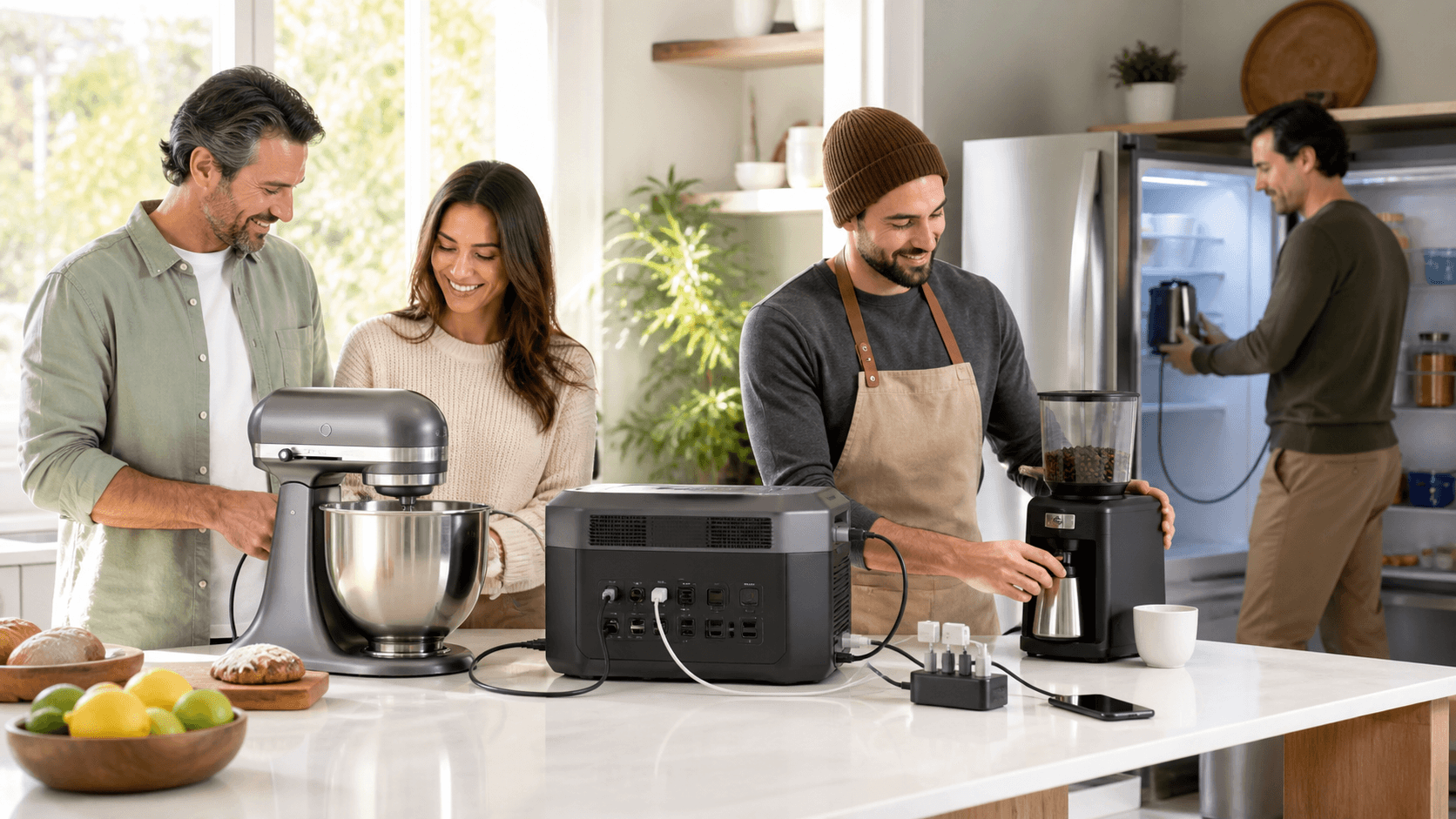
Portable power stations are battery-based. They are silent, have no fumes, and can be used indoors. You charge them from the wall, a generator, or solar panels. They are great for work-from-home setups, Wi-Fi, phones, and medical devices, especially overnight.
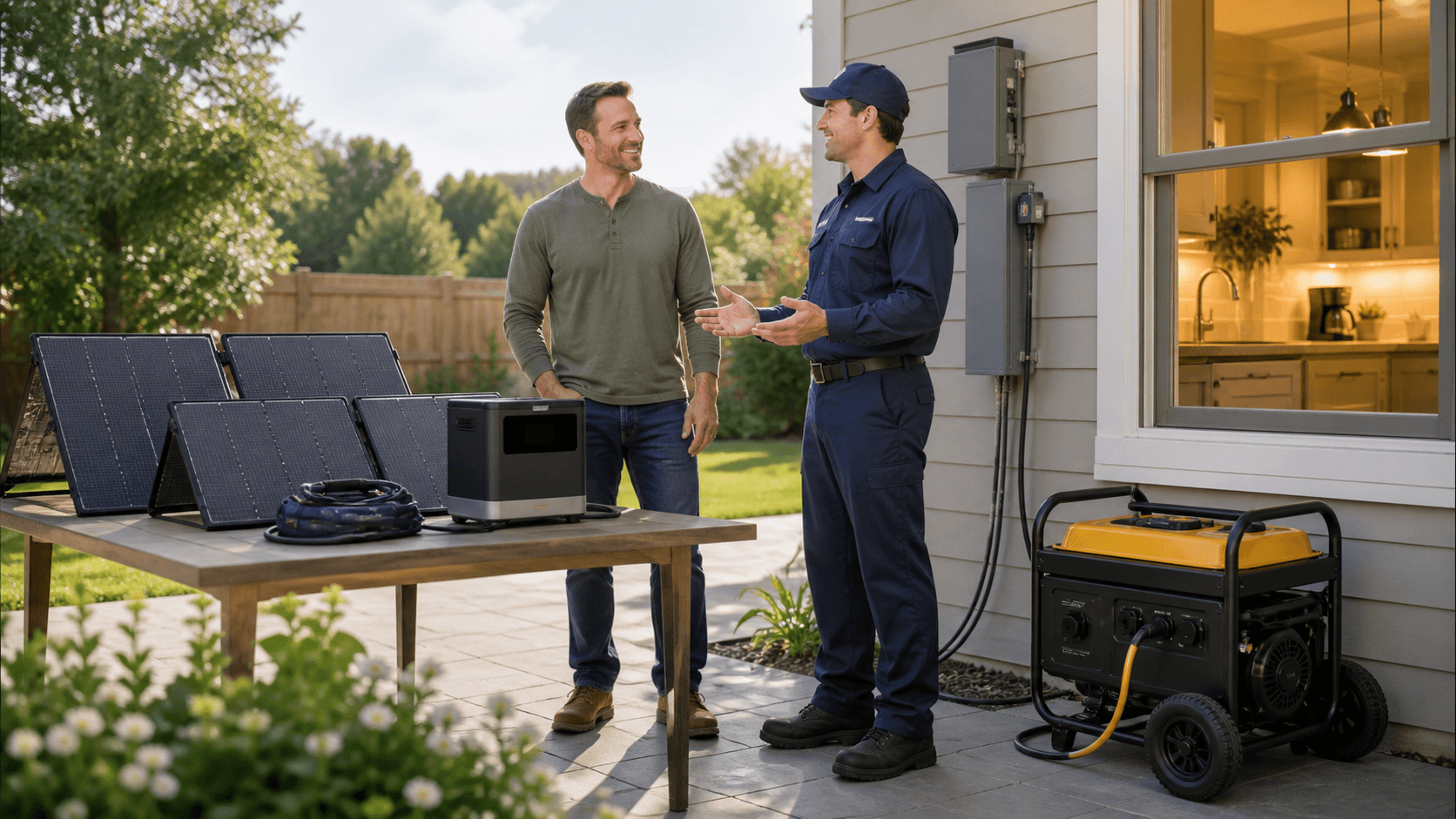
Hybrid solar power kits pair solar panels with batteries. During the day, they collect energy from the sun. Stored power keeps lights, fans, and electronics running at night. When you match them with a transfer switch and a generator, they can cover long summer or winter outages with much less fuel use.
Strong pairings many suburban homeowners like are:
- Inverter generator plus transfer switch for essential circuits
- Solar kit plus battery for daytime cooling and nighttime lighting
- Portable power station for office gear, kids' devices, and key medical items
When we say a system "actually works," we mean it has tested runtimes for real loads like fridges and freezers, is rated for safe use, and is compatible with standard suburban panels and outlets. Quiet operation and proper safety listings matter a lot when you are putting equipment next to bedrooms and shared fences.
Choosing the Right System for Your Home and Budget
To pick the right setup, work backward from what you need to power. Start with a simple pencil-and-paper process.
- List all critical loads.
- Write down their wattage from labels or manuals.
- Estimate how many hours per day each one needs to run.
- Add it up to get your daily energy needs.
Once you know your must-run loads, you can match them to generator size, battery capacity, or solar output. A smaller gasoline unit might cover short outages. A mid-size inverter generator or portable power station fits longer outages for a typical suburban home. A larger solar plus battery kit adds more long-term resilience and can support more comfort loads.
Think about how you will fuel or charge your system:
- Gasoline and propane should be stored safely and legally in garages or sheds
- Solar can stretch fuel, so the generator runs less often
- Some battery systems can top up from the grid during off-peak hours
Noise and placement matter in tight neighborhoods. Units should be kept outside, away from windows and doors, to avoid carbon monoxide risks. Quiet inverter generators and indoor-rated battery systems keep the peace with nearby homes and stay within local noise rules.
At Generator Vault, we group generators, solar kits, portable power stations, and batteries into clear categories, with specs and common use cases. That way you can match real-life needs, not guess in the dark.
Smart Ways to Mix Solar, Batteries, and Backup Generators
You do not have to pick just one tool. Some of the most reliable suburban setups mix solar, battery storage, and a backup generator.
Here's how a hybrid system usually works:
- Solar panels and batteries handle daily needs and short outages
- The generator steps in when clouds, smoke, or storms last for days
- Transfer gear makes it easy to feed power safely to key circuits
In summer, strong sun can help run AC or fans during the hottest hours and cut grid use. At night, batteries keep lights, routers, and bedroom fans steady. During long cloudy spells, or in winter when days are short, the generator fills the gap and keeps batteries topped up without running nonstop.
In a typical suburban setting, that might look like:
- Roof-mounted solar where the HOA allows it
- A compact ground or patio mount in a side yard if space is tight
- A battery system in the garage or utility area
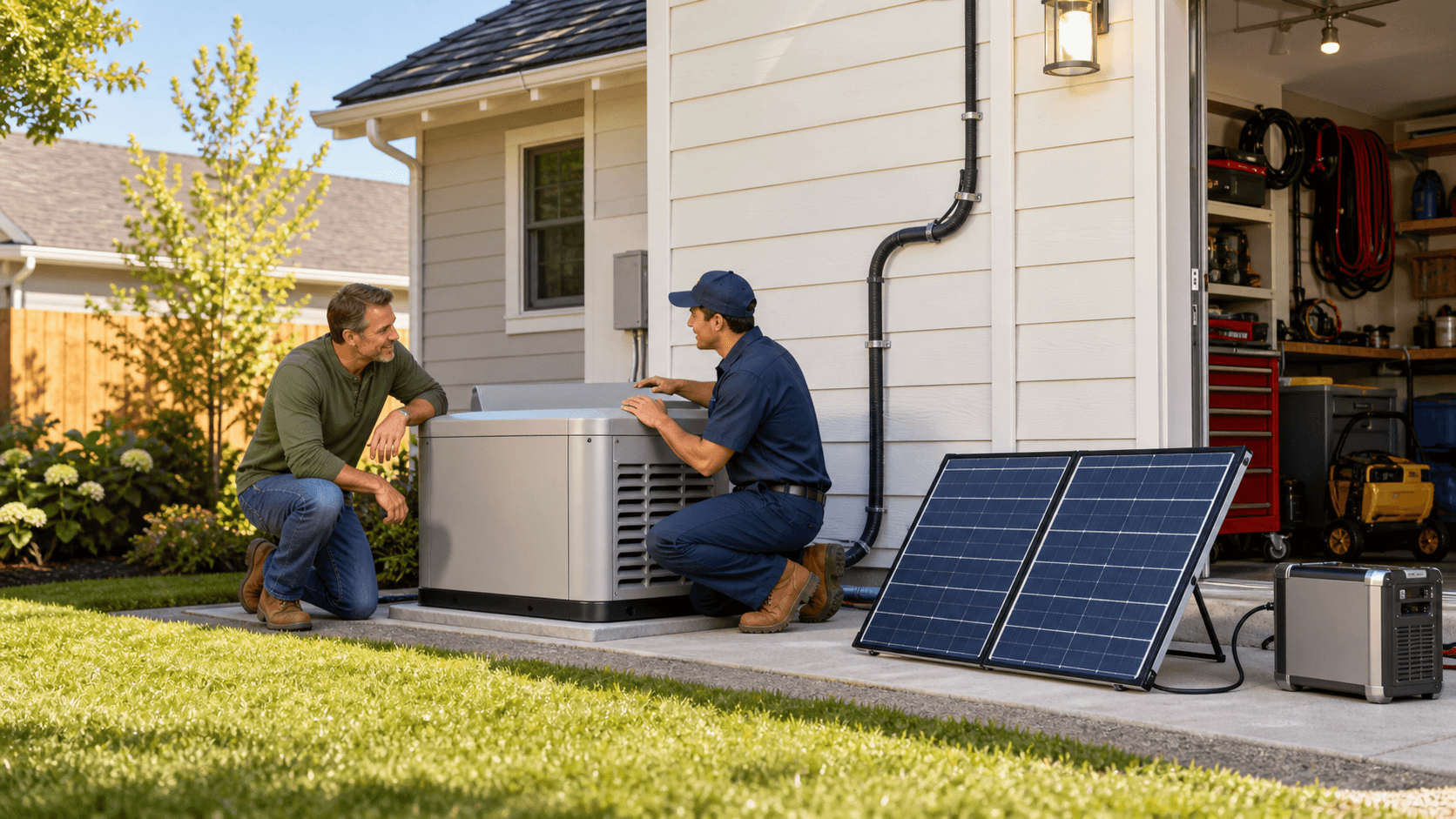
- A quiet inverter generator ready to take over during long outages
Generator Vault focuses on off-grid-ready solar kits, batteries, and generators that can be combined into one simple, cohesive setup. The goal is a system that feels easy to live with, is simple to manage, and keeps your home comfortable when the grid drops.
Make Your Home Grid Optional Before the Next Outage
Power problems rarely wait for a convenient time. Suburban homes juggle work, school, and comfort, and they all depend on steady electricity. Off-grid power for suburbs is not about moving to the woods. It is about staying put and making your house grid optional, so life keeps going when the utility lines fail.
A simple short-term plan looks like this: audit your critical loads, pick a primary solution like a generator, solar kit, portable power station, or hybrid mix, then set it up and test it before late-summer storms and heat waves arrive. Generator Vault is built around helping homeowners do exactly that, with curated gear and practical guidance tailored to real suburban homes.
Get Started With Reliable Off-Grid Power Solutions Today
Take the next step toward energy independence with Generator Vault and explore our curated off-grid power solutions designed for cabins, RVs, and backup preparedness. We will help you match the right system to your power needs so you are never left in the dark. If you have questions or need personalized guidance, reach out through our contact page so we can walk you through your best options.