When the Lights Go Out, Your Power Should Not
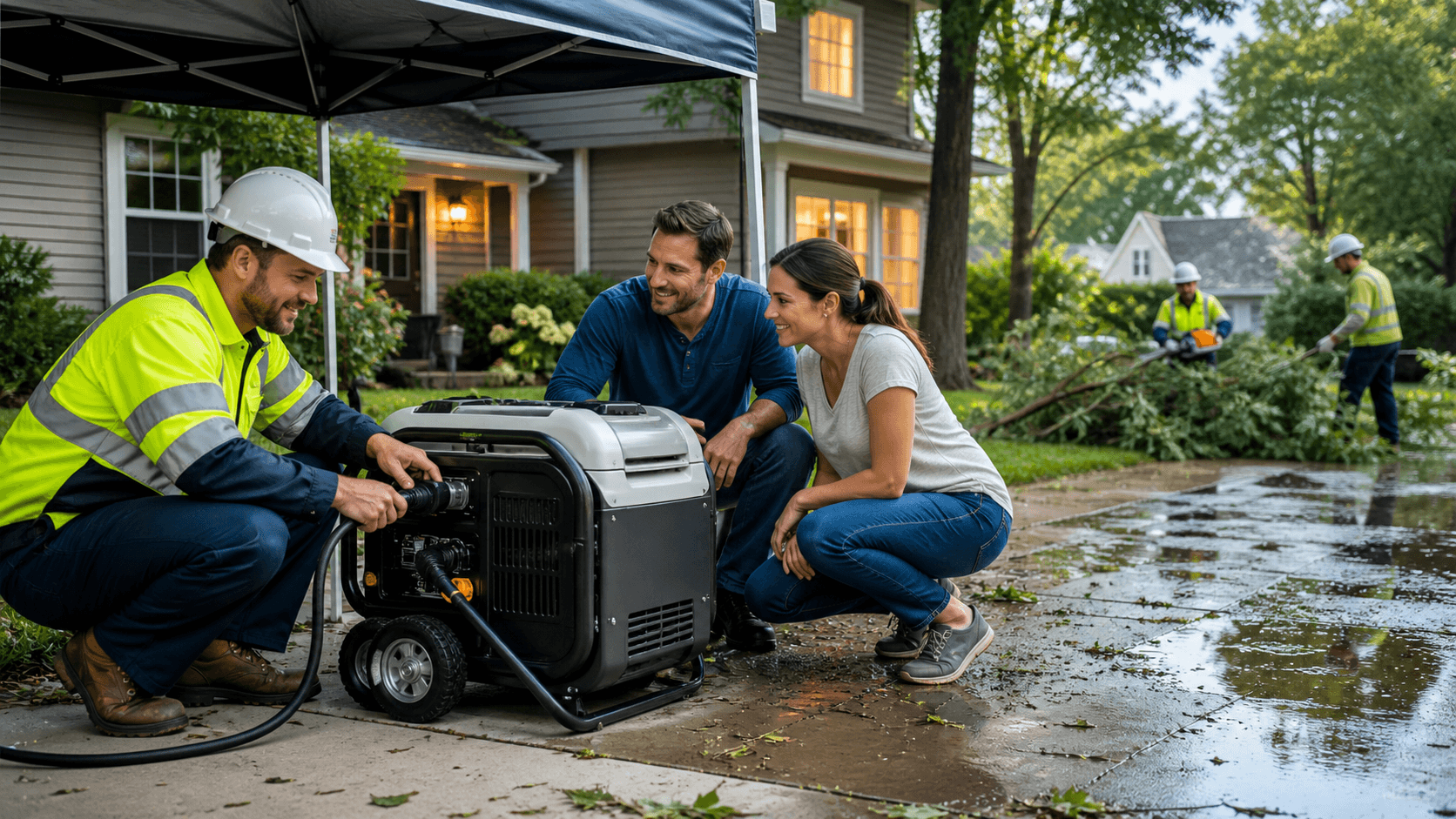
Power cuts are hitting more homes at the worst possible times, like during a hot June afternoon when the AC is working hard and storms start to roll through. The grid can struggle with heavy summer demand, early hurricane activity, and sudden severe weather. When that happens, the big question shows up fast: do you really need a home backup generator, or will a portable power station be enough?
We want to help you sort that out in real-world terms, not theory. We will look at how each option performs during summer storms, how long they can run, what they can realistically power, and how they fit different homes and budgets. By the end, you should have a clear picture of when a home backup generator beats a portable power station, and when the smaller, quieter option actually makes more sense.
The Reality of Modern Power Outages
Power outages used to feel rare and short. Now many areas deal with more heat waves, stronger thunderstorms, early tropical storms, and wildfire threats that can shut off power with little warning. June often kicks off a stretch of unsettled weather when the grid is already stressed from heavy AC use.
Not all outages are the same, and that matters a lot when you plan backup power. You might see:
- Short, planned outages for grid work, lasting a few hours
- Quick weather blips that cut power for an afternoon or one night
- Long, messy blackouts after storms or early hurricanes
- Rolling brownouts, when power drops or cycles on and off
Portable power stations do best in short, predictable outages and mild weather, for light loads like phones, laptops, and small devices. But when you face days without power, or when AC, heating, or pumps must run, battery-only setups can drain fast. Your backup choice should match:
- Typical outage length where you live
- Season and temperature, like humid summers or chilly shoulder seasons
- How much of your home truly needs to stay powered
If your area often loses power when you need AC, a home backup generator quickly moves from "nice to have" to "this actually fits how we live."
When a Home Backup Generator Is the Clear Winner
There are some situations where a home backup generator simply does a job that a portable power station cannot touch.
First, whole-home or heavy-load coverage. A properly sized home backup generator can support big, power-hungry systems such as:
- Central AC units
- Well pumps and sump pumps
- Large fridges and upright or chest freezers
- Electric water heaters
- Critical medical equipment
- Larger home office setups
With a transfer switch and the right setup, many of these loads can run at the same time. That keeps the house livable, keeps basements dry, keeps food safe, and keeps medical gear running without constant juggling.
Second, extended runtime and fuel flexibility. Standby generators run on propane or natural gas. With a steady fuel supply, they can run for long stretches, which is a huge advantage during:
- Multi-day storms that knock down lines
- Early hurricane season outages in June and beyond
- Rural or remote areas where repairs are slow
You are not limited by the size of a battery. As long as the fuel keeps flowing and the unit is maintained, the power stays on.
Third, automatic, seamless operation. Many home backup generator systems sit quietly in the yard until they sense a power loss. Then they start on their own and restore power within seconds. That kind of automatic backup matters when:
- You work from home and need a steady Internet connection
- You store refrigerated medications
- You have security systems or cameras that must stay live
- You travel often during storm season and might not be home to switch things on
If your goal is for the house to almost forget that the grid went down, a home backup generator is usually the right answer.
Where Portable Power Stations Shine Instead
Portable power stations still have a big place in a smart backup plan. They are not trying to be full, whole-home systems, and that is okay. They shine at a different set of tasks.
For short outages and light loads, portable power stations are excellent. They keep:
- Phones and tablets charged
- Laptops running for work or school
- Routers and modems on so you keep Internet
- Small fans or a single room space heater (used carefully) going
- CPAP machines powered overnight
For a few hours to a day, a well-sized portable unit can make an outage much less stressful without the need for fuel.
They also win on noise, emissions, and portability. Portable power stations are:
- Very quiet while running
- Emission-free at the point of use
- Safe to use indoors with proper care
- Easy to move from room to room
That makes them perfect for apartments, condos, or homes where you cannot install a permanent generator, and for trips like camping, tailgating, RV travel, or outdoor work.
Then there is solar recharging and modularity. When paired with portable solar panels, a power station can:
- Stretch runtime during daytime outages
- Top off between rolling outages
- Serve as a flexible backup that can be used inside, then outside, as needed
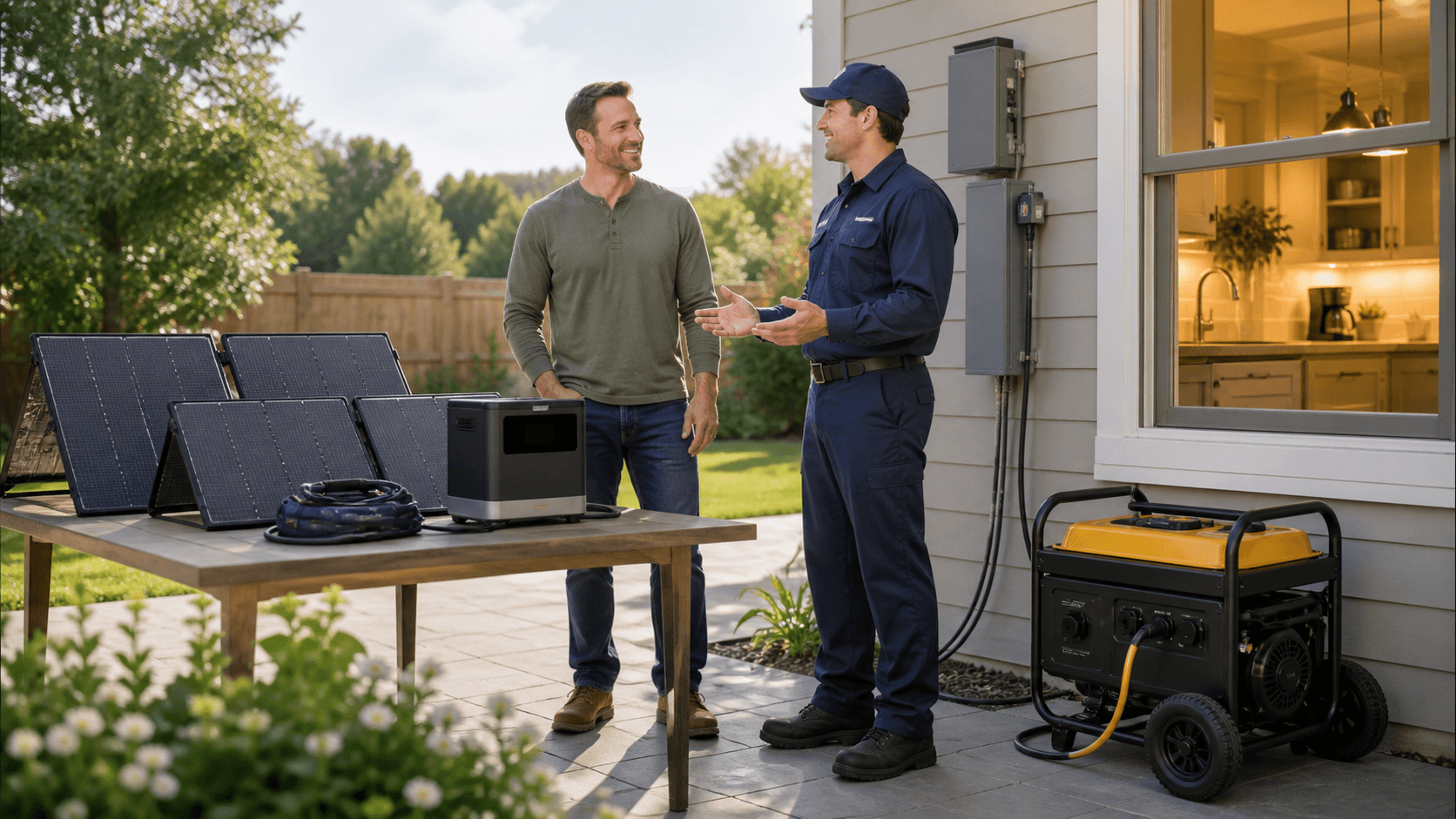
Solar and portable power are a great complement to a traditional home backup generator. They do not really replace a generator when you need heavy loads or long runtimes, but they do fill in a lot of gaps.
Cost, Installation, and Maintenance Tradeoffs
Home backup generators and portable power stations also feel different when you look at setup and long-term care.
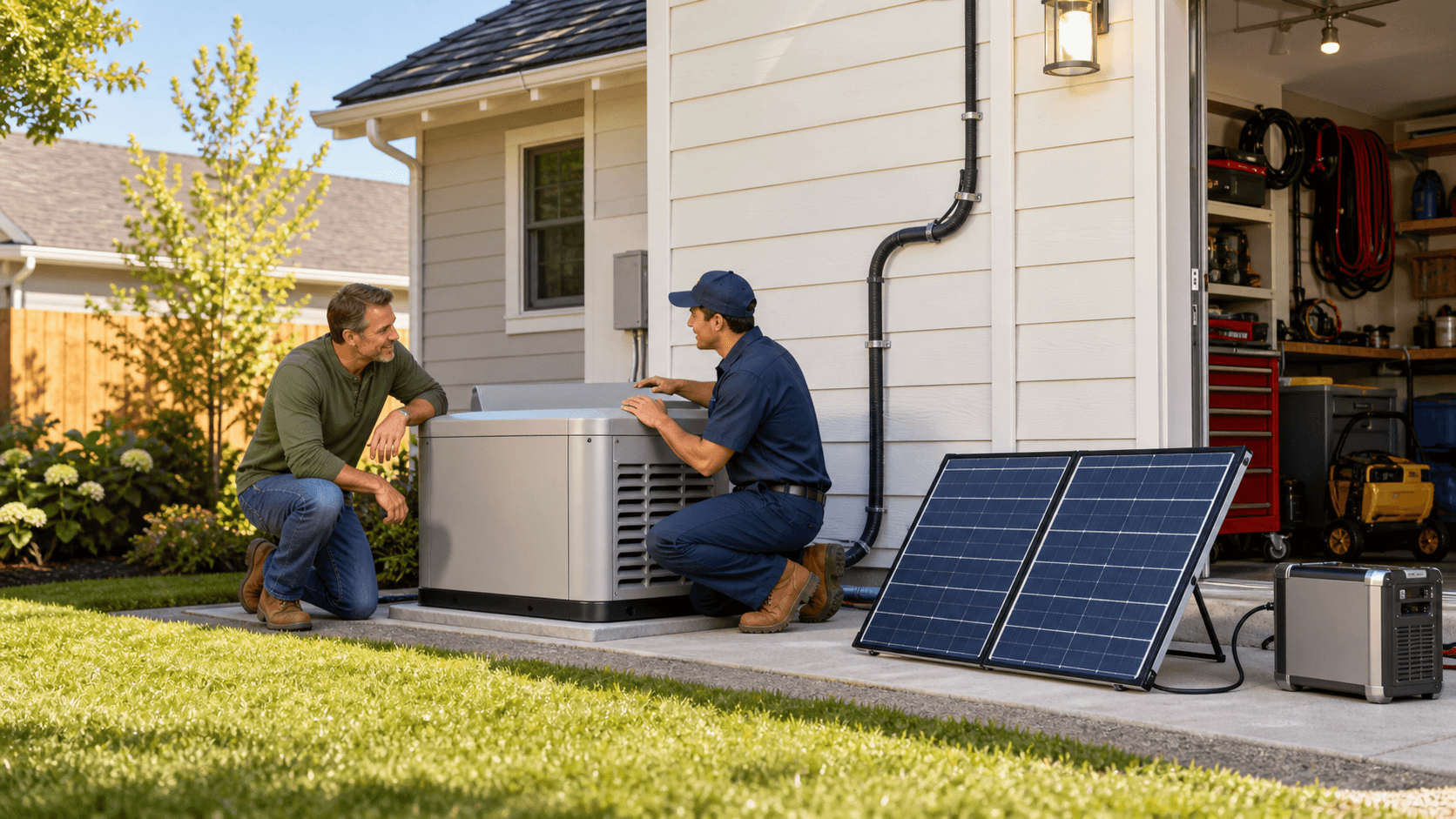
A home backup generator usually needs professional installation. That often includes:
- Siting the generator on a pad
- Fuel connection, like propane or natural gas
- A transfer switch tied into your main electrical panel
- Any needed permits or inspections
The process is more involved, but the result is a system that is part of your home, ready to work without you lifting a finger.
Portable power stations are more plug-and-play. You charge them with a wall outlet, maybe add solar panels, then plug your devices directly into the unit when the power goes out. No wiring into the house, no fuel lines, just simple use.
Operating costs and planning also differ. A home backup generator means thinking ahead about:
- Fuel, such as propane levels or natural gas access
- How long you might need to run during a typical storm pattern
- Safe operation and ventilation outdoors
Portable power stations run on stored energy. You plan around:
- Keeping them charged before storm season
- Topping off between outages
- Adding solar input if that fits your setup
Maintenance and reliability matter for both options. For a home backup generator, you can expect things like:
- Periodic test runs
- Oil changes and filter checks
- Professional service visits, often once a year
Portable power stations need:
- Battery health care, like not leaving them empty for long periods
- Firmware updates when provided by the maker
- Simple checks to make sure ports and cords are in good shape
Either way, late spring and early summer are perfect times to do pre-storm checks so you are not scrambling when the first big thunderstorm hits.
Matching Power Solutions to Your Home and Season
Choosing between a home backup generator and a portable power station starts with knowing your own home. It helps to make a simple list:
- What has to stay on during an outage: AC, heat, sump pump, well pump, fridge, freezer, medical devices, work gear
- How often your area loses power, and for how long
- What your summers and shoulder seasons really feel like
If you live where early hurricanes and strong June storms are common, or where wells and pumps keep water moving, a home backup generator often makes the most sense. If your outages are usually short and you mainly care about electronics, a portable power station may be enough.
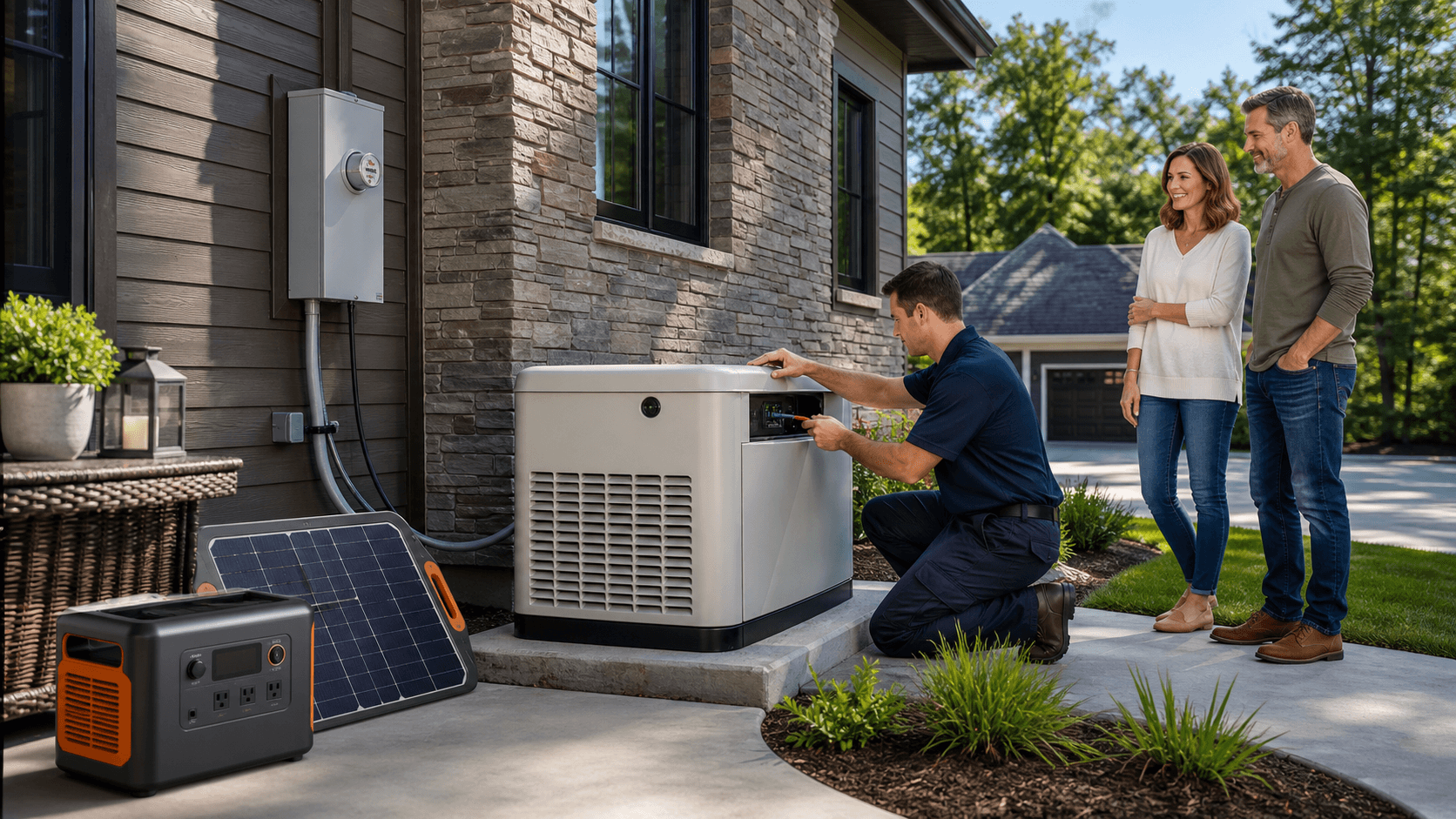
For many homeowners, a hybrid plan is the sweet spot. A home backup generator covers:
- Whole-home or heavy-use needs
- Long, unpredictable outages
- Times when you are away and still want protection
One or more portable power stations then handle:
- Quiet indoor power for specific rooms
- Mobile needs like camping or work on the go
- Extra flexibility when you do not want the generator running for small tasks
At Generator Vault, we focus on both sides of this story. We curate home backup generator systems, portable power stations, batteries, solar options, and off-grid appliances so you can build a backup plan that fits your life, your home, and your storm season, not someone else's idea of "average."
Protect Your Home With Reliable Backup Power Today
If you are ready to stop worrying about the next outage, Generator Vault can help you choose the right home backup generator for your needs. Our team will walk you through capacity, runtime, and setup so your home stays powered when the grid goes down. Have questions about installation, sizing, or compatibility with your existing setup? Just contact us and we will help you get fully prepared.