Why Reliable Power Is Non-Optional for Small Businesses
Backup power is not a luxury for a small business; it is survival. When summer storms roll through and heatwaves push the grid to its limit, outages spike right when your shop, office, or kitchen is the busiest. A few dark hours can mean spoiled food, stopped production, frozen checkout lines, and customers walking away frustrated.
Most owners understand they need some kind of backup, but many still end up with the wrong generator for a business. Hidden assumptions, rushed last-minute buys, and one-size-fits-all advice lead to poor choices that only show up when the lights go out. Our goal is to help you avoid that trap and feel confident about the power you depend on.
At Generator Vault, we focus on curated backup and off-grid systems for homes and businesses, including right here in areas that deal with heavy summer heat and strong storms. Let us walk through the most common blind spots so you can choose a system that actually works for your space.
The Hidden Cost of Choosing the Wrong Generator
When the grid fails, any generator might feel better than nothing. But the idea that any model is fine for your business can turn into a very expensive myth. An undersized or poorly matched unit can:
- Stall or trip breakers when several machines start at once
- Struggle under peak load and shut down when you need it most
- Produce power that is too rough for sensitive electronics
- Put stress on motors, refrigeration, and IT equipment
This does not just risk a one-time outage. It can lead to repeated failures, frequent emergency calls, and even damage that voids equipment warranties. You might end up paying for repairs, extra fuel, and an unplanned upgrade, all on top of the original generator cost.
There is also a quieter cost. Every time your credit card system goes offline, your cold storage warms up, or your phones go dead, customers notice. Trust drops when you keep having to say, "Sorry, we are down again." The right generator for a business is not just a product, it is part of your continuity plan. It should be chosen for reliability and fit, not just for a familiar brand name or whatever happens to be on a shelf.
Why Small Businesses Misjudge Their Power Needs
Sizing is where many small businesses go wrong. A lot of owners guess their needs based on square footage or copy what the shop down the street bought. Others only look at the running watts printed on their gear and ignore the higher starting watts needed when motors kick on.
Different businesses have very different loads. For example, you might have:
- Restaurants with multiple refrigerators, freezers, and cooking equipment
- Salons with high-draw dryers, irons, and AC working hard
- Small manufacturers with compressors, pumps, and power tools
- Offices with servers, laptops, and network gear that hate dirty power
Summer makes all this more intense. AC units, ice machines, and refrigeration work overtime when temperatures soar. Many owners buy in July, right when they are hottest and busiest, and underestimate how hard their HVAC and cold storage actually pull on start-up.
A simple load assessment goes a long way. The basics look like this:
- Make a list of circuits and equipment you must keep on
- Separate must-run items from nice-to-have items
- Note starting watts vs running watts for major gear
- Think about future growth, like more fridges, more workstations, or a second prep area
This kind of planning is not always simple, which is why we lean on tools and expert support to help customers get the capacity right instead of guessing.
Fuel, Location, and Noise Tradeoffs Many Owners Miss
Once you know how much power you need, it is easy to focus only on wattage and forget everything around it. Fuel type, placement, and sound level all shape how well your generator fits your daily work.
Common fuel options include:
- Gasoline, easy to find, but harder to store for long periods
- Propane, cleaner burning, with the option of larger storage tanks
- Natural gas, steady supply if your line stays active in a storm
- Diesel, strong for heavy loads and long runtimes
Each fuel has its own tradeoffs in storage needs, runtime, and availability during long outages. A system that sits unused for months, then runs hard through a storm, needs fuel planning just as much as power planning.
Location matters too. Safe placement means:
- Keeping the unit a safe distance from windows and doors
- Making sure exhaust flows away from people and workspaces
- Protecting the unit from heavy rain, debris, and direct heat
- Respecting local rules or permit requirements
Noise is another surprise for many owners. A generator that sounds fine in an open yard can feel too loud next to a patio, shared office wall, or quiet studio. For restaurants, salons, and retail spaces, constant engine noise can drive customers away or trigger complaints from neighbors and building managers. We take these real-world factors into account when helping business owners pick from curated options instead of grabbing a generic model that may not fit their setting.
Not All Backup Is Fuel-Powered, Solar and Batteries Matter Too
Many people hear the word generator and only picture a fuel engine on a metal frame. There are newer options that can make backup power quieter, cleaner, and more flexible for your operation.
Battery backup systems, for example, can:
- Carry you through short outages without any noise or fumes
- Provide smooth, clean power for IT gear, point-of-sale, and security
- Pair with a smaller generator that only runs when batteries need charging
Solar can also help the right type of business. Roof or ground panels feeding a battery bank can give you:
- More predictable energy use over time
- Lower dependence on the grid during peak strain
- A power setup that fits eco-conscious branding and customer values
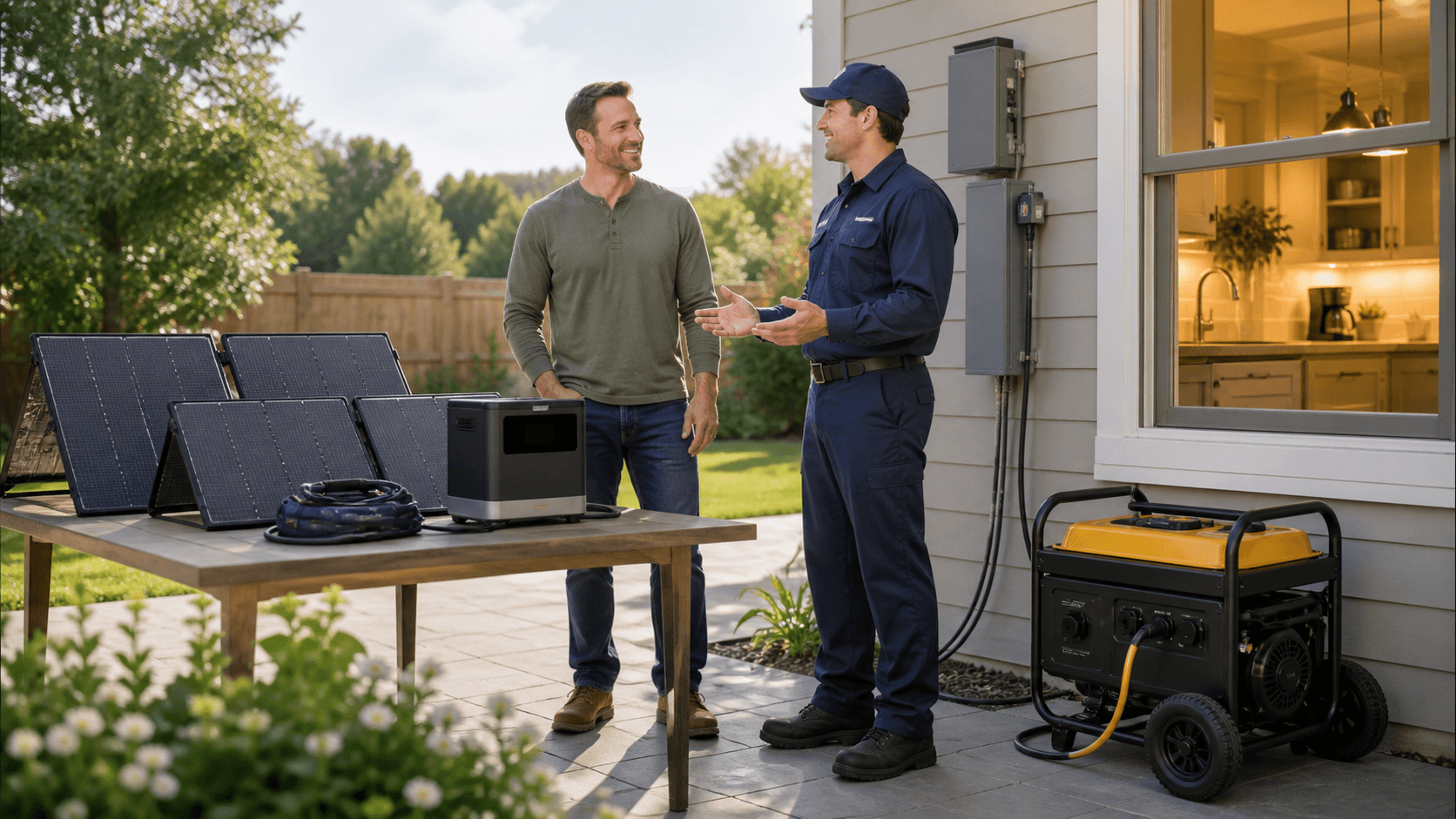
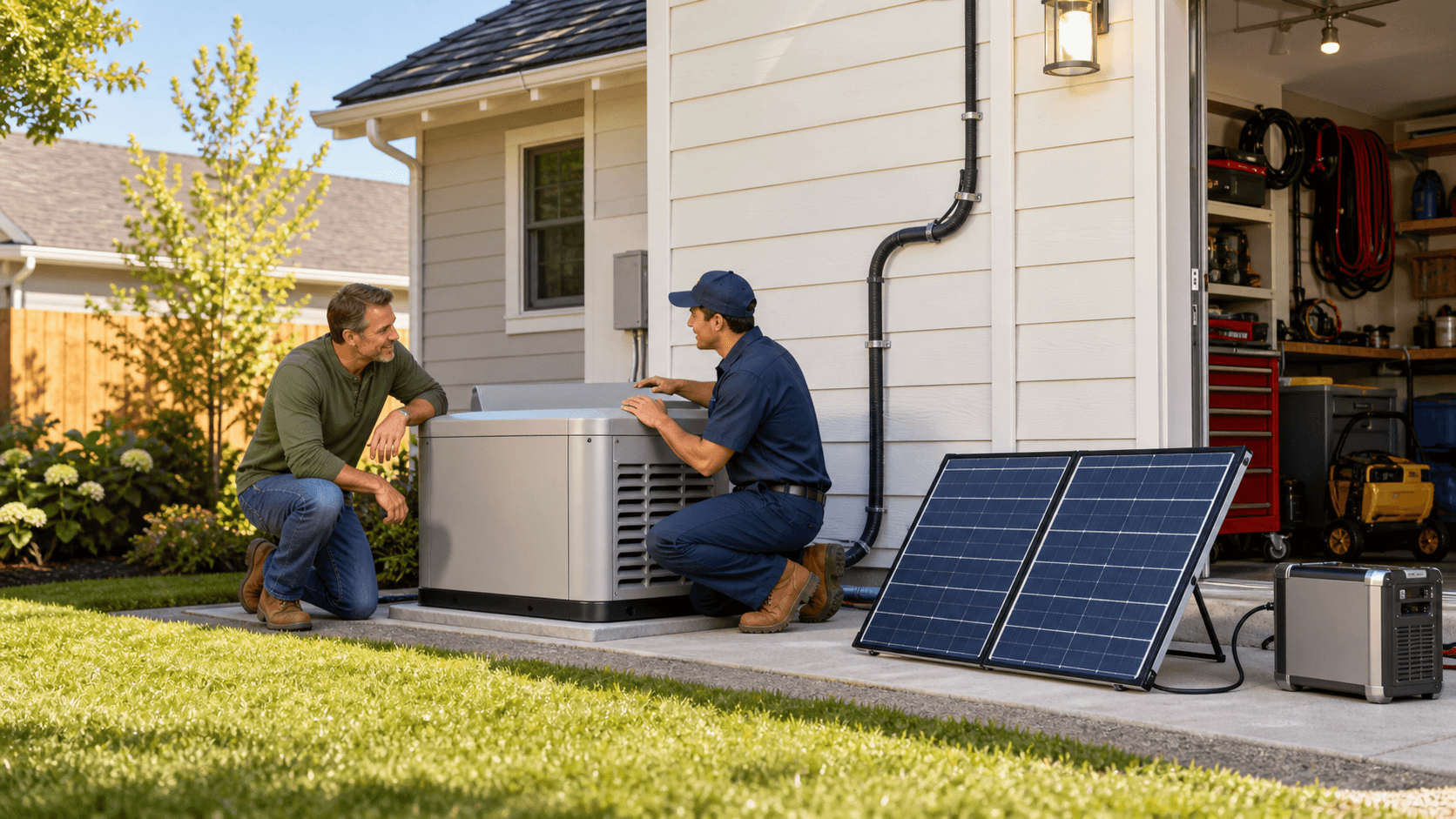
At Generator Vault, we focus not only on stand-alone generators, but also on full backup and off-grid options that mix solar, batteries, and traditional units. That mix can support both daily efficiency and long emergencies when the grid stays down.
How to Choose the Right Generator for a Business with Confidence
Choosing well does not have to feel overwhelming. A clear path can make the decision much easier:
- List all equipment and circuits you must keep running
- Mark which items are non-negotiable and which can wait
- Decide how long you want to stay open during a typical outage
- Pick a fuel source that fits your property and supply comfort
- Match generator size and type to these goals, with some room for growth
Growth planning is easy to forget when you are focused on surviving the next storm. Still, it helps to ask: Are you planning more coolers, more staff, or a second line of equipment in the next few years? Building in a bit of space now can keep you from outgrowing your system too soon.
This is where expert guidance pays off more than guesswork. At Generator Vault, we have built tools, filters, and support around the way small businesses actually run, so you can narrow choices fast and focus on the units that truly fit your needs. With summer storms and heat-related outages peaking around July, planning before the next weather pattern hits gives you a calm, clear path instead of a rush purchase in the dark.
Turning Power Risk Into a Quiet Advantage
A well-chosen generator for a business does more than keep the lights on. It keeps your doors open when others are closed, protects your stock, and lets your staff keep serving people without panic. While nearby shops scramble and shut down, you stay steady and calm.
At Generator Vault, we believe reliable backup should feel like that: quiet confidence, not stress. When you take time to list your critical loads, think through your outage history, and look at generator, solar, and battery options together, you can turn a constant worry into a working plan. That plan becomes a quiet edge for your brand, your team, and your long-term growth.
Protect Your Operations With Reliable Backup Power
Keep your business running through any outage by choosing the right generator for a business that fits your power needs and budget. At Generator Vault, we help you compare options so you can invest confidently in equipment that protects your revenue, staff, and customers. If you have questions or need personalized guidance, reach out through our contact page and we will walk you through your next steps.